
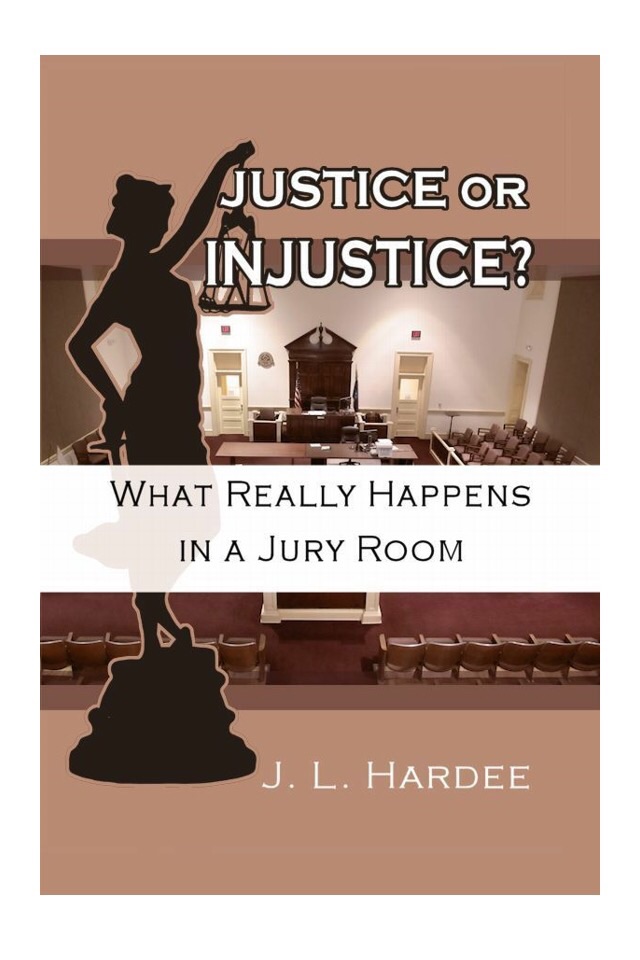
 A week ago, I finished reading Justice or Injustice: What Really Happens in a Jury Room and it has some profound lessons for every trial attorney… Especially those in the criminal arena.
It is a short piece of non-fiction about a juror’s participation in a capital murder case and outlines the dangers that can occur when jurors do not know their right to hang a jury and hold onto their heartfelt and honest opinion on a just verdict. Compromise while expedient is not necessarily fair and just. Jurors are under tremendous pressure and really need help and guidance in understanding the process and their rights.
A juror has an absolute right to disagree, hold-out and hang a jury if necessary to serve the ends of justice. If this is not explained, then an innocent citizen on trial could end up on the wrong end of a coercive verdict. A group of jurors uncertain about their right to disagree eventually capitulated to the majority out of doubt and fear in the case of Kimberly Renee Poole. According to the author, the jury foreperson pushed the minority to change their verdict of “not guilty” primarily focusing on the character of the defendant’s background as a stripper and swinger claiming she deserved jail. Alone afraid, uncertain, tired, and nicotine deprived the last hold-out (the author J.L. Hardee’s) surrenders to a guilty verdict. After the trial, it is learned that the foreperson had a close ties to the prosecution which were not disclosed in voir dire. The holdout juror’s post verdict efforts to reverse what happened are discussed, but ultimately unsuccessful.
Although one was not given in the case, the story also demonstrates the danger of an Allen Charge or dynamite charge as it is sometimes referred to by the courts. See Allen v. United States, 164 U.S. 492 (1896). Such a charge is used to encourage jurors in the minority to reconsider their opinion.
Obligations and responsibilities as a juror include the following:
1. A jury’s factual decisions are forever. There is only one chance to get it right. Except in rare instances, appellate courts review legal rulings not factual findings.
2. Lady Justice is blindfolded for a reason. She is not influenced by station of life, background, color race, appearance, wealth, sex, religion or creed. Her protections are bestowed on every single citizen. Jurors are sworn to decide a case fairly and impartially without bias prejudice. If someone tries to decide the case based upon something other than the judge’s instructions and the evidence relevant to those legal issues, then they should be reported to the court immediately.
3. While jurors should not be afraid to honestly reconsider their opinion during deliberations, they are fully within their right to disagree with their fellow jurors. No one will punish a juror for doing so.
4. While this may be the most difficult thing a person is asked to do, they must be strong and courageous if justice is to prevail. A person’s fate is in their hands.
 The Right to Trial by Jury